How LucaPlex connected cardiac-device deployment, managed study phones, site readiness, logistics, training and live operational tracking around one operating model.
Executive summary Global, prospective cardiovascular studies become difficult when device deployment, local infrastructure, site activation and operational status are managed as separate activities. This case shows how LucaPlex connected those activities around one live study operating model for a multicenter study in China—coordinating imported cardiac devices, locally sourced study phones, mobile-device management, device pairing, kit readiness, logistics, training, platform access and issue resolution.
Fragmentation turns deployment tasks into operational overhead
A global device study may depend on specialist technologies, local procurement, hospital workflows and several operational teams. The equipment may be sourced in one location, configured in another, shipped to multiple sites and used by patients through a managed mobile workflow.
The operational burden appears between those activities. Imported devices must be reconciled with locally sourced phones. Phone configuration must be reconciled with MDM enrollment. Pairing must be reconciled with kit readiness. Shipment must be reconciled with site training, platform access and open issues.
Without a shared study context, the study team inherits a parallel coordination layer:
- separate status trackers for equipment, phones, shipments and site allocation;
- manual follow-up for MDM enrollment, device pairing and configuration exceptions;
- training records that are not visible alongside site or kit readiness;
- issue logs that sit outside the current deployment picture; and
- delayed visibility into whether a site is genuinely ready to execute.
The question is not simply whether the cardiac-monitoring technologies can be delivered to China. It is whether devices, people, platforms and sites can be prepared and monitored as one operational system.
One operating layer—not another disconnected point solution
LucaPlex connects the surrounding operating context without replacing the specialist technologies responsible for device operation or signal acquisition. It provides one current view of the study activities that determine whether deployment can proceed.
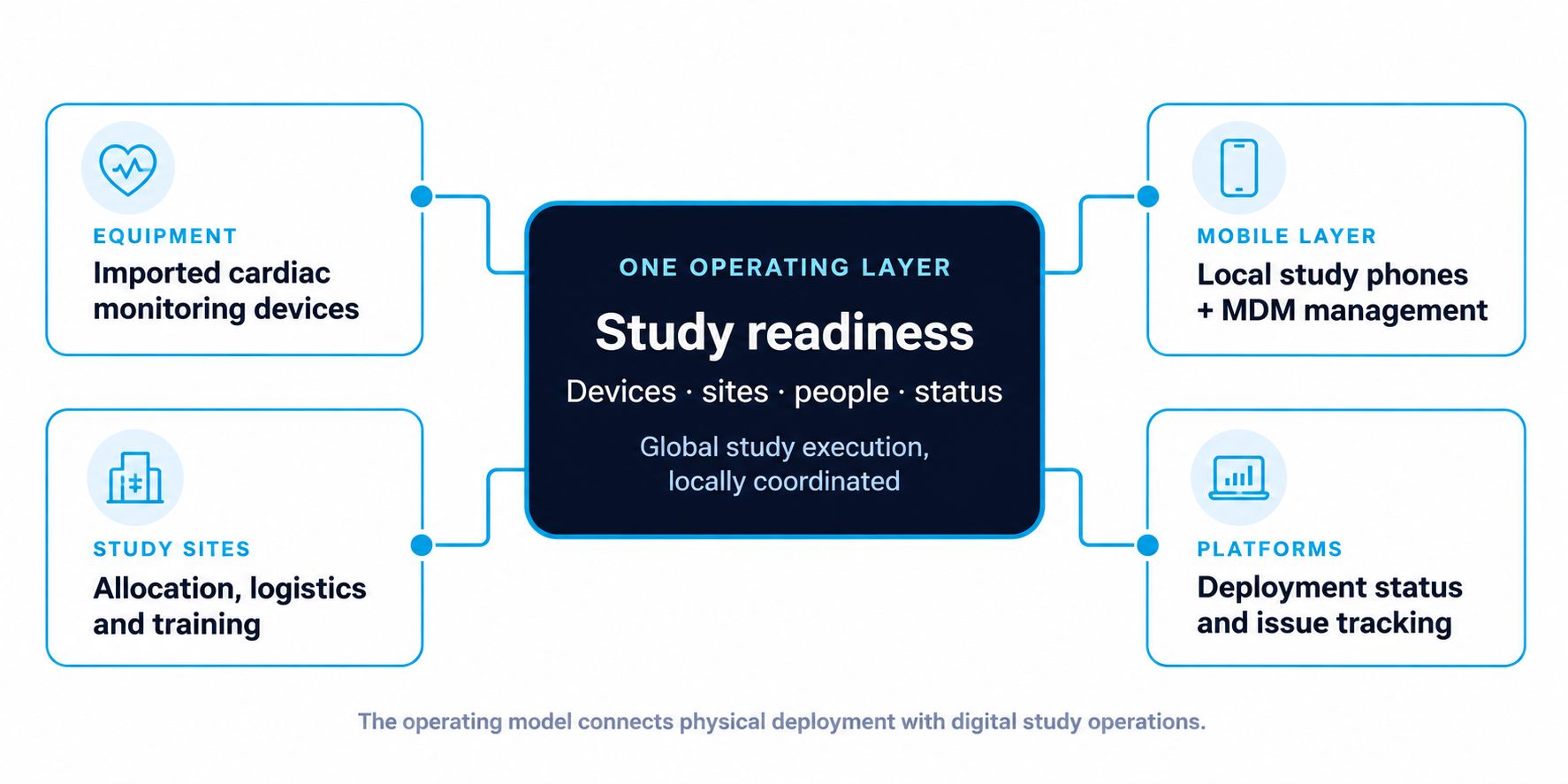
LucaPlex organizes equipment, managed mobile infrastructure, sites and platforms around one live study-readiness context. This illustration is a conceptual representation of the operating model.
The operating model is built around four connected foundations:
- Device readiness: import, configuration, MDM enrollment, pairing, verification and kit preparation;
- Site readiness: allocation, shipment, receipt, training and platform access;
- Operational status: current state, outstanding actions and exceptions across workstreams; and
- Governed follow-up: shared issue ownership, status and next action for study leadership.
This is the role of LucaPlex in the study: not another isolated dashboard, but an operating layer that connects the physical and digital conditions required for multicenter execution.
Device and mobile deployment become one controlled workflow
Luca supported the import of the cardiac-monitoring equipment into China and locally sourced study phones for the patient-facing device workflow. MDM services were deployed on those phones so that the study devices could be configured and managed uniformly rather than treated as unrelated consumer hardware.
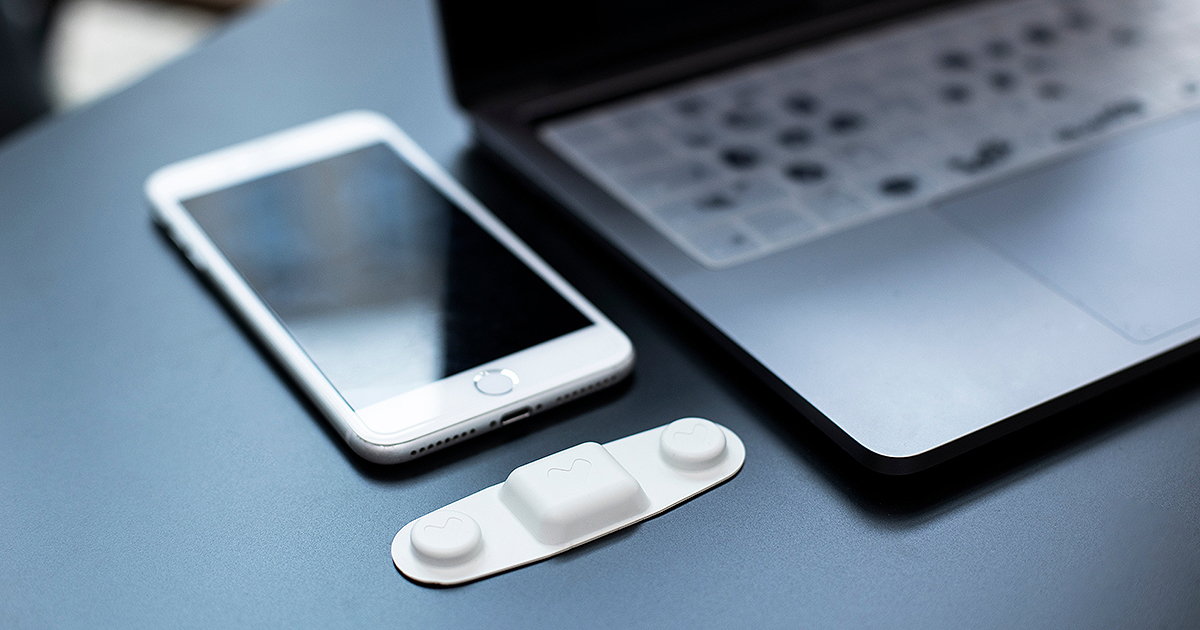
From imported device to managed study kit
Local phone procurement, MDM enrollment and device pairing were handled as part of readiness—not as post-delivery support tasks. The final study configuration remains subject to the approved device and platform setup.
The resulting workflow brought together:
- imported cardiac-monitoring equipment;
- locally sourced study phones;
- uniform MDM configuration and management;
- device-to-phone pairing;
- component and kit verification; and
- allocation to participating research sites.
By treating these activities as one preparation sequence, the project team could distinguish available components from a verified, allocated and operationally prepared kit.
The challenge was not simply to deliver two cardiac-monitoring technologies. It was to make devices, managed phones, platforms, sites, training and logistics ready to operate together across a global, prospective, multicenter cardiovascular study in China.
Logistics and training become part of site readiness
In a multicenter study, logistics is not complete when a tracking number exists. The relevant equipment must reach the correct site, the required components must be present, the platform workflow must be available and site personnel must be prepared to use it.
Luca coordinated allocation, shipment, receipt status and site training as connected readiness activities. This gave study leadership a clearer basis for distinguishing a kit that had been shipped from a site that was prepared to begin study operations.
Training was treated as part of deployment rather than an activity after deployment. Site teams needed practical guidance on device setup, managed-phone use, study-platform access, participant support and common operational issues.
Live operations tracking for study leadership
LucaPlex live operations tracking gave the study team a shared view across the workstreams that determine execution readiness. The view was designed for day-to-day operations, not only retrospective reporting.
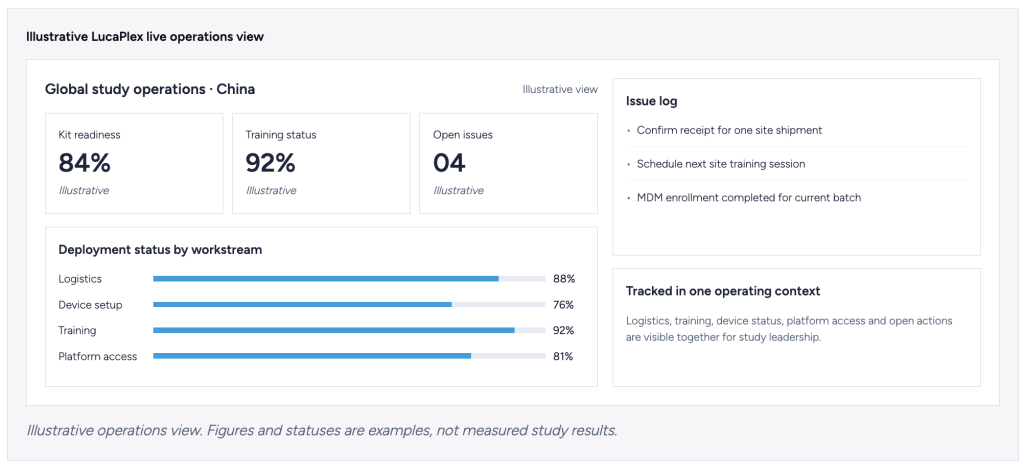
Tracked in one operating context
Logistics, training, device status, platform access and open actions are visible together for study leadership.
Illustrative operations view. Figures and statuses are examples, not measured study results.
The live view supports several practical questions:
- Which equipment has been imported, configured, paired or verified?
- Which kits have been allocated, shipped or received at site?
- Which users or sites still require training or platform access?
- Which issues are open, who owns them and what happens next?
A study command center for operations
The operating model becomes visible in daily execution. Study leadership can review device readiness, site allocation, logistics, training and open issues without reconstructing the current state from disconnected updates.
For a global study, this local operating layer helps translate a centrally defined deployment plan into site-level execution in China. It gives the study team a common context for physical equipment, managed mobile infrastructure, platform tasks and operational exceptions.
The value is not that LucaPlex replaces every specialist system. The value is that it reduces the need for the study team to become the integration layer between them.
What should study teams measure?
A credible deployment model should be measured against operational readiness, not only shipment completion. Relevant measures include:
- Import to verified kit: Time from equipment arrival in China to configuration, pairing and readiness verification.
- Device readiness: MDM enrollment, pairing and kit-verification completion rates.
- Site activation: Time from allocation or shipment to receipt, training and operational activation.
- Issue resolution: Open issue volume, ownership and time from identification to resolution.
These measures help distinguish movement of equipment from readiness to execute the study workflow.
Case-study note: This article describes a real operational implementation in anonymized form. Sponsor identity, study name, specific indication, protocol details, participant information, endpoints, device models and study results are intentionally not disclosed.